The earlier KV cache card explained the mechanism: save past keys and values so the model does not recompute the whole prefix at every generated token. This card looks at the same object from the serving side, where the cache is mostly a memory management problem.
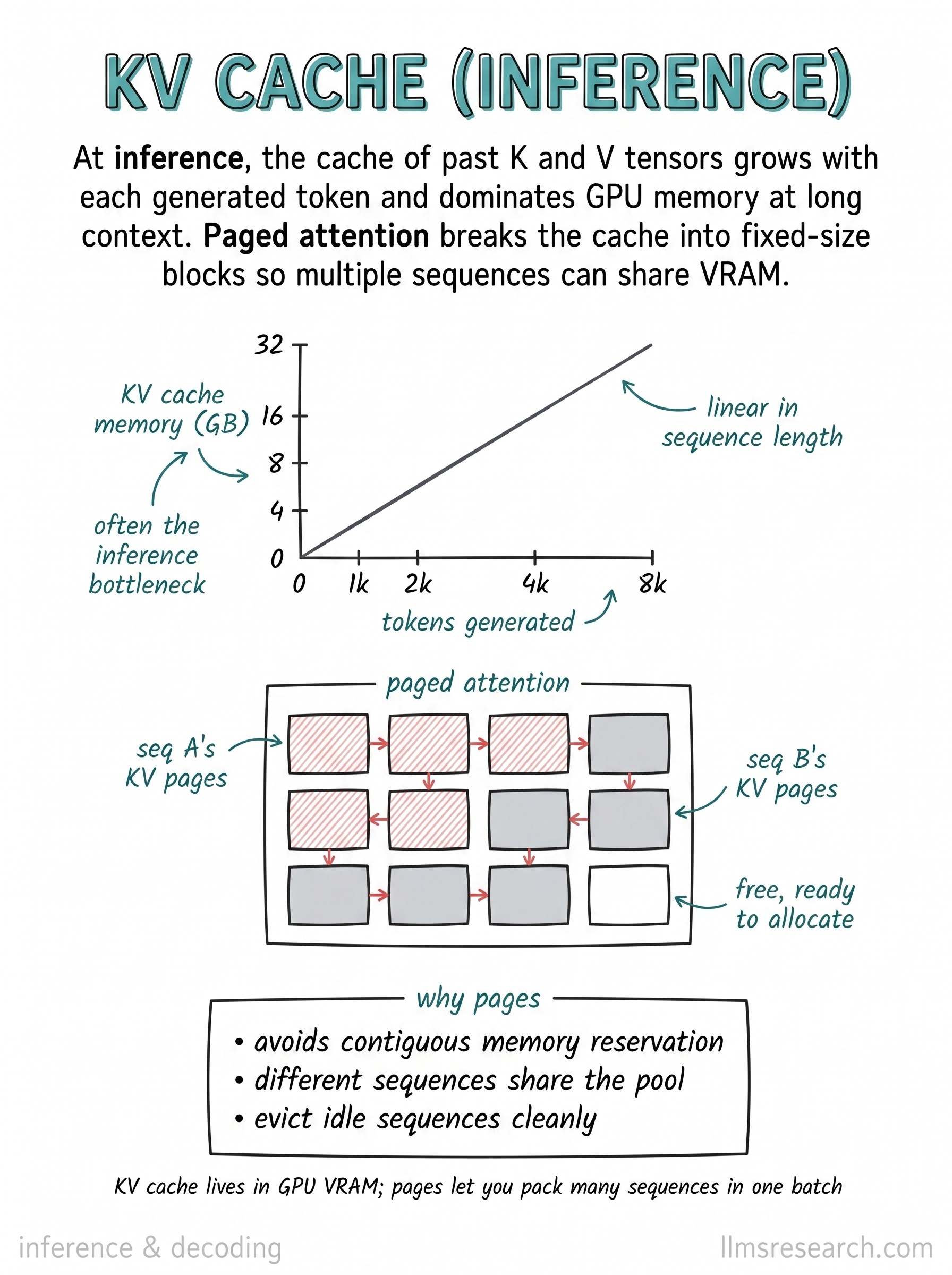
The upper plot shows the first constraint. KV cache memory grows linearly with the number of tokens kept. A longer prompt, a longer generation, more layers, more KV heads, and a larger head dimension all add memory. At short context this may be a detail. At long context or high batch size, the cache can become the main thing limiting how many requests fit on the GPU.
Paged attention is the layout fix shown in the middle of the card. Instead of reserving one contiguous chunk of memory for each sequence, the system splits the cache into fixed-size pages and allocates pages from a shared pool. One sequence can occupy a few red pages, another can occupy gray pages, and free pages remain available for new tokens or new requests.
The point is packing. Real serving batches contain sequences of different lengths, arriving and finishing at different times. If every sequence needed a large contiguous reservation, VRAM would fragment and sit unused. Pages let the runtime grow, share, and evict cache blocks cleanly, which is why modern inference engines treat KV cache layout as part of the core serving design rather than an implementation detail.