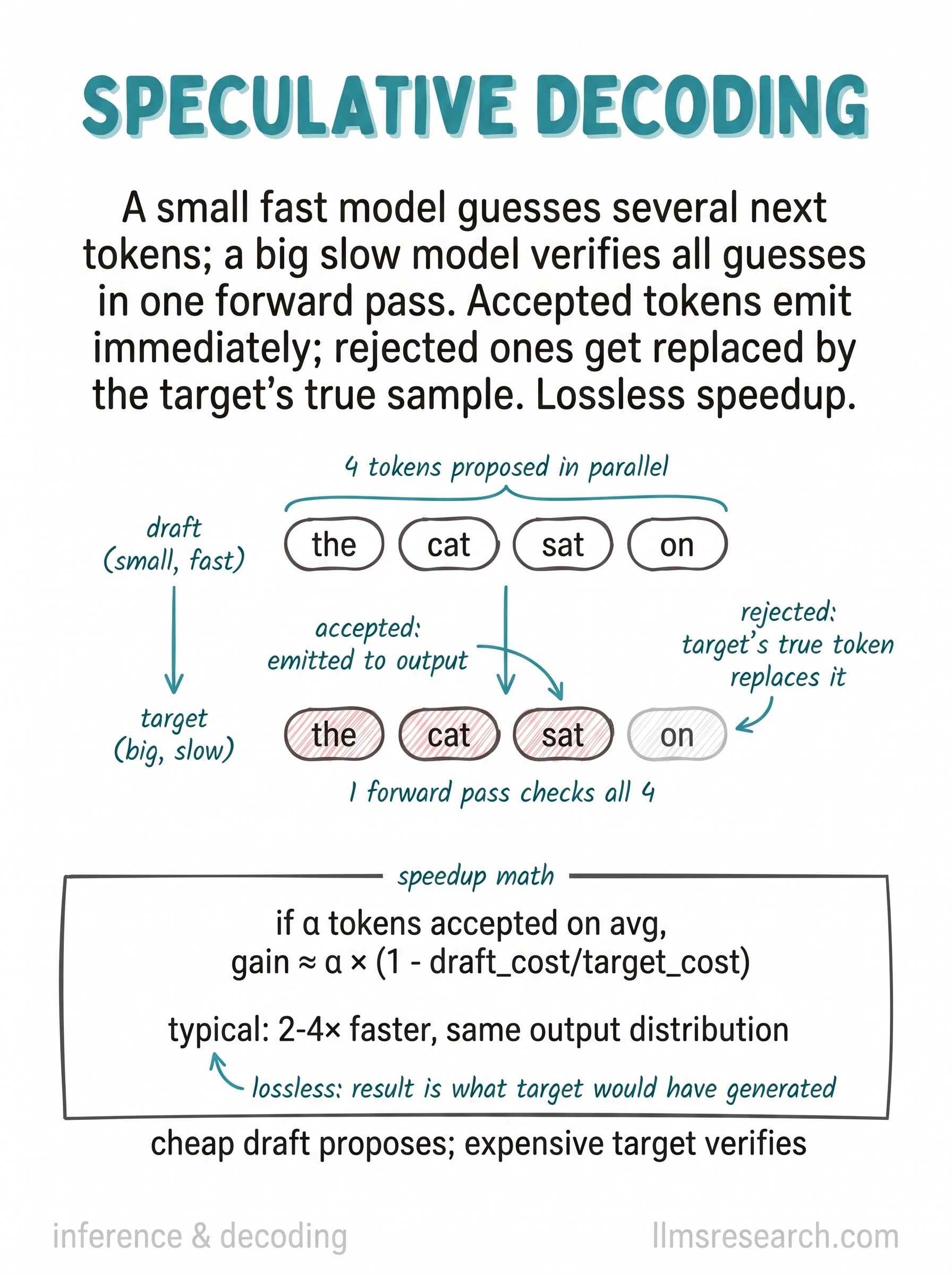
Autoregressive generation is slow because the target model normally produces one token per forward pass. Speculative decoding keeps the same target distribution but tries to get several accepted tokens out of one target pass.
The card shows the two-model version. A small draft model runs first. Because it is cheap, it proposes several tokens quickly, such as “the cat sat on”. The larger target model then checks those proposed tokens in a single forward pass. Tokens that match what the target would have allowed are accepted and emitted. When a draft token fails verification, the target’s sampled token replaces it and the cursor resets from there.
The speedup depends on how many draft tokens survive on average and how cheap the draft model is relative to the target. If most proposals are rejected, little is gained. If several are accepted per verification pass, the system has effectively collapsed several target decoding steps into one. The card’s speedup formula is a rough way to say that acceptance rate is the central variable.
The important word is lossless. Speculative decoding is not a smaller model taking over the answer. The large target model still verifies the distribution, so the accepted output has the same distribution the target model would have produced by itself. The benefit is latency, not a change in model behavior.