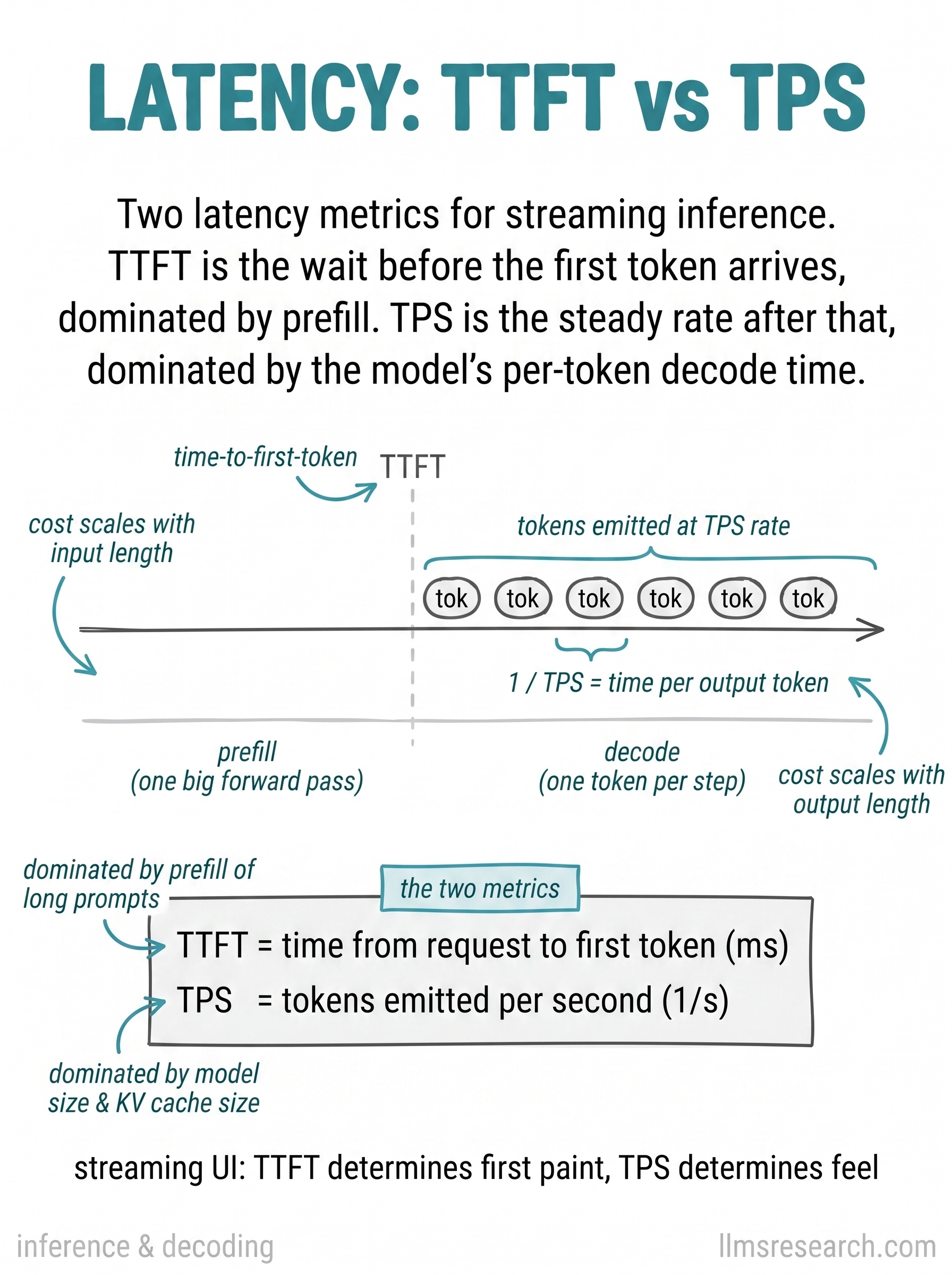
A streaming model response has two different waits hidden inside it. The first is the wait before anything appears. The second is the pace at which tokens arrive after that.
TTFT, time to first token, measures the first wait. It starts when the request is sent and ends when the model emits the first output token. Most of that time is prefill: the model runs one large forward pass over the prompt, builds the initial KV cache, and gets ready to decode. Long prompts push TTFT up because the model has more input tokens to process before it can produce even one output token.
TPS, tokens per second, measures the steady decode rate after the first token. In the timeline on the card, this is the row of output-token pills in the decode region. Each new token requires another step through the model using the KV cache. Model size, batch shape, cache size, and memory bandwidth all affect this rate. The reciprocal is the time per output token, which is what the bracket between two tokens marks.
The distinction matters for product feel. TTFT determines the blank wait before a streaming response starts, so it controls first paint. TPS determines whether the answer feels quick once it is moving. A system can have a good TPS and still feel slow if prefill is large, and a system can start quickly but feel sluggish if decode tokens arrive slowly.