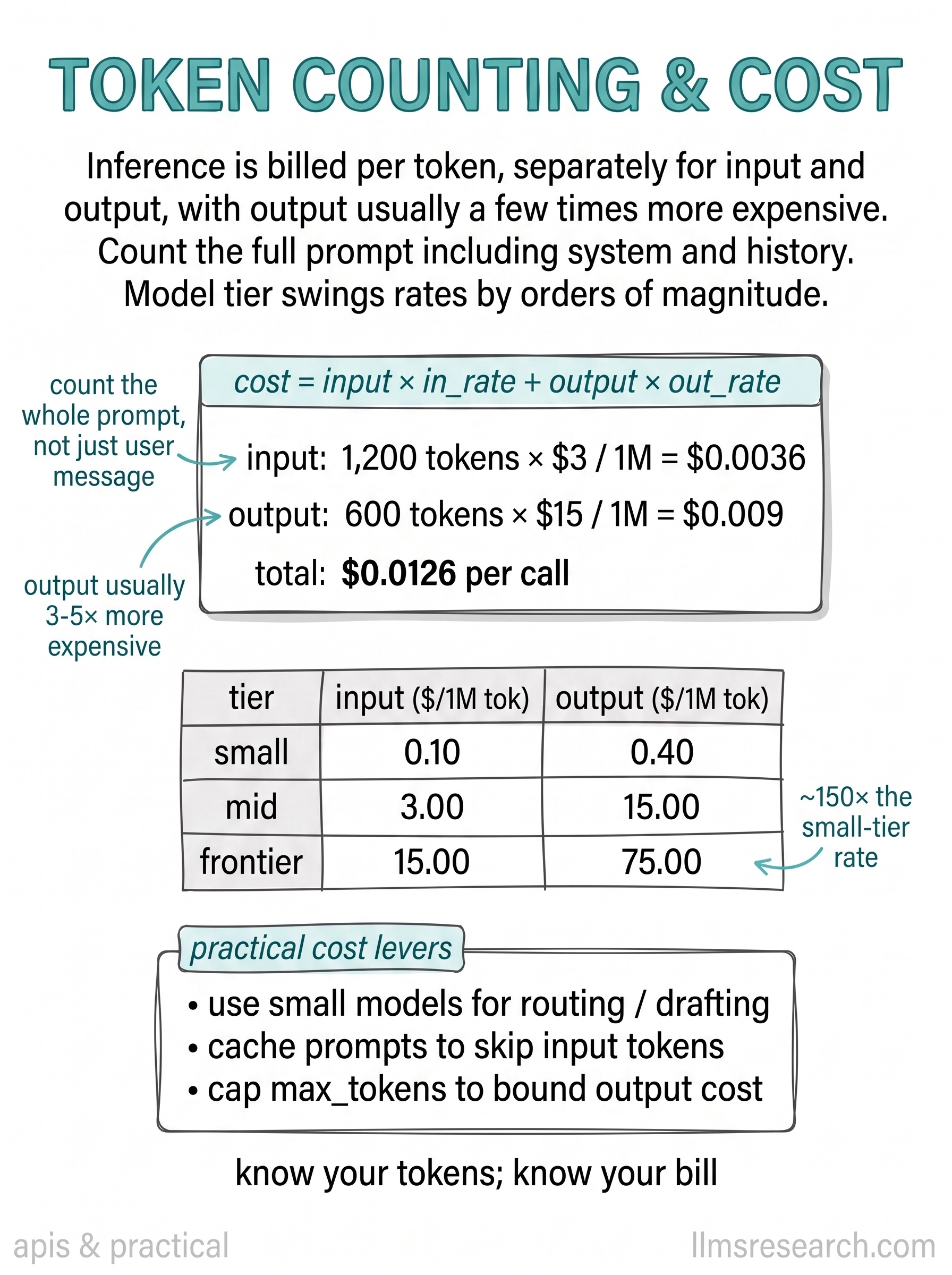
The card works through one chat request as arithmetic. Input tokens multiply by an input rate per million. Output tokens multiply by a higher output rate. The example totals a few cents for a modest call. Beside that calculation sits a small tier table: small, mid, and frontier models with very different per-million prices.
Billing follows a simple formula: cost equals input tokens times the input rate plus output tokens times the output rate. Providers quote those rates per million tokens, so you divide by one million before multiplying by your counts. The usage block in an API response is the ground truth after a call, but you need accurate estimates before you ship a feature.
Two counting details matter in practice. First, input means the whole prompt the model sees: system message, tool definitions, retrieved documents, and full chat history, not only the latest user line. Second, output is usually three to five times more expensive per token than input on mid-tier models. Long answers cost more than long prompts at the same token count.
The tier table shows how wide the spread can be. A frontier model can land around 150 times the small-tier rate for the same token counts. That is not a rounding difference. It is a product choice about capability versus spend. The card’s lower box lists levers: route easy steps to small models, cache stable prompt prefixes to avoid re-billing them, and cap max_tokens so runaway generations cannot blow the budget.
The habit to keep is to estimate in tokens and split input from output. Count with the same tokenizer the provider uses when possible. When comparing models, compare both rates and typical output length, because a cheaper input rate does not help if the model writes twice as many tokens to reach the same answer.