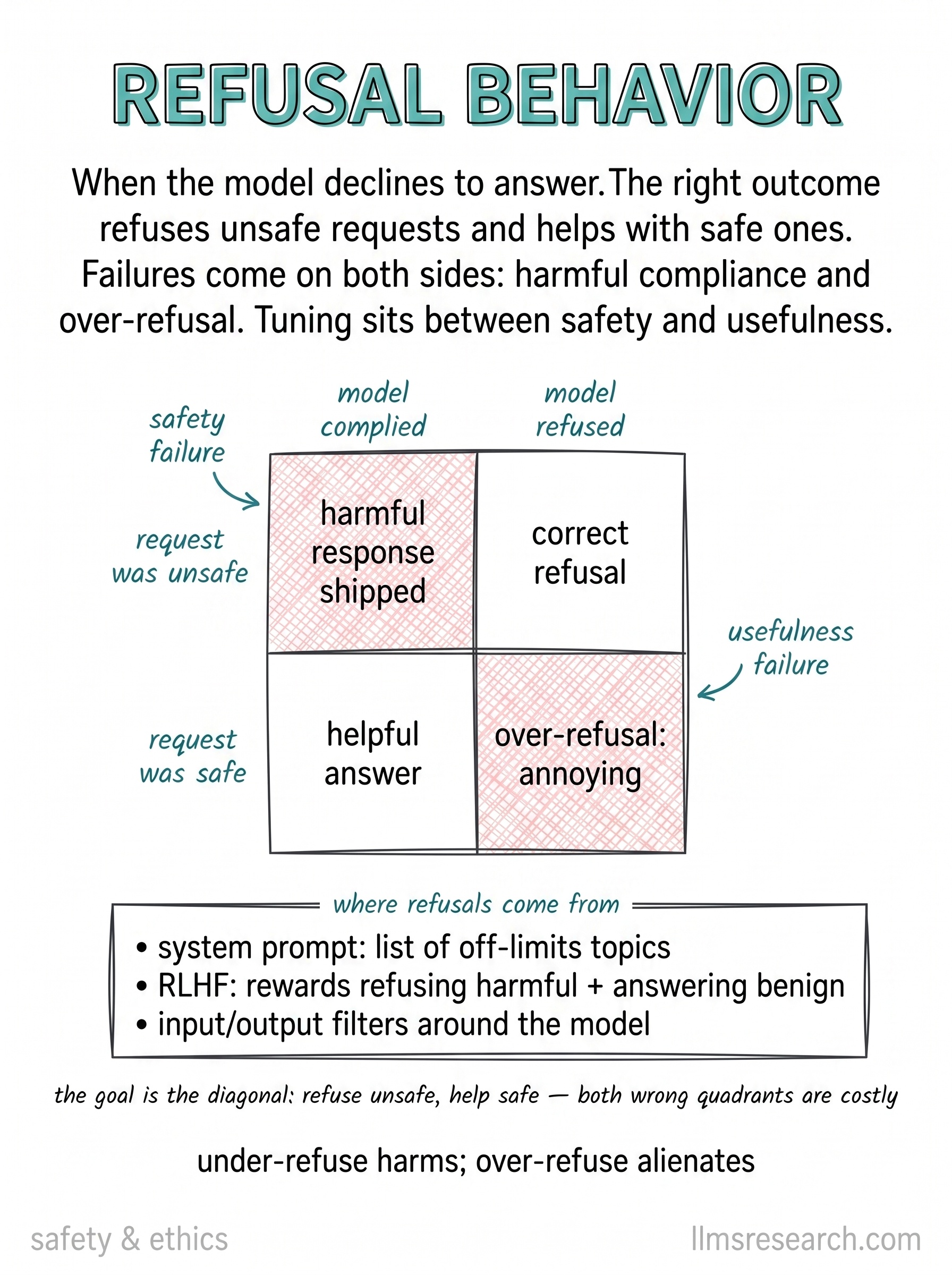
Aligned models are trained to refuse some requests. The card organizes outcomes in a two-by-two grid. Rows split safe versus unsafe requests. Columns split compliance versus refusal. Two cells are correct: refuse unsafe requests, comply on safe ones. Two cells are failures, highlighted in red. Unsafe plus complied ships a harmful response. Safe plus refused is over-refusal, annoying to users who needed a legitimate answer.
Refusal is not one switch inside the model. The middle box lists three sources. System prompts enumerate off-limits topics and tone rules. RLHF rewards refusing harmful prompts and answering benign ones. Input and output filters around the model catch patterns the base model misses. Jailbreak attacks target the gap between these layers, which is why refusal behavior must be evaluated under adversarial prompts, not only clean examples.
The tuning problem is bilateral. Under-refusal creates safety risk: the model helps with weapon instructions, private data extraction, or other policy violations. Over-refusal creates usefulness risk: the model declines medical information, creative writing, or coding tasks that are legitimate. Teams move the boundary with more refusal training data, clearer system prompts, and regression tests on both sides of the line.
The card’s footer captures the design stance. The goal is the diagonal: refuse unsafe, help safe. Both wrong quadrants carry cost, under-refuse harms people, over-refuse alienates users. Refusal behavior is therefore a measured property, not a vibe. Track false refusal rate on safe prompts and false compliance rate on unsafe prompts, and revisit the balance when either metric drifts after a new fine-tune.