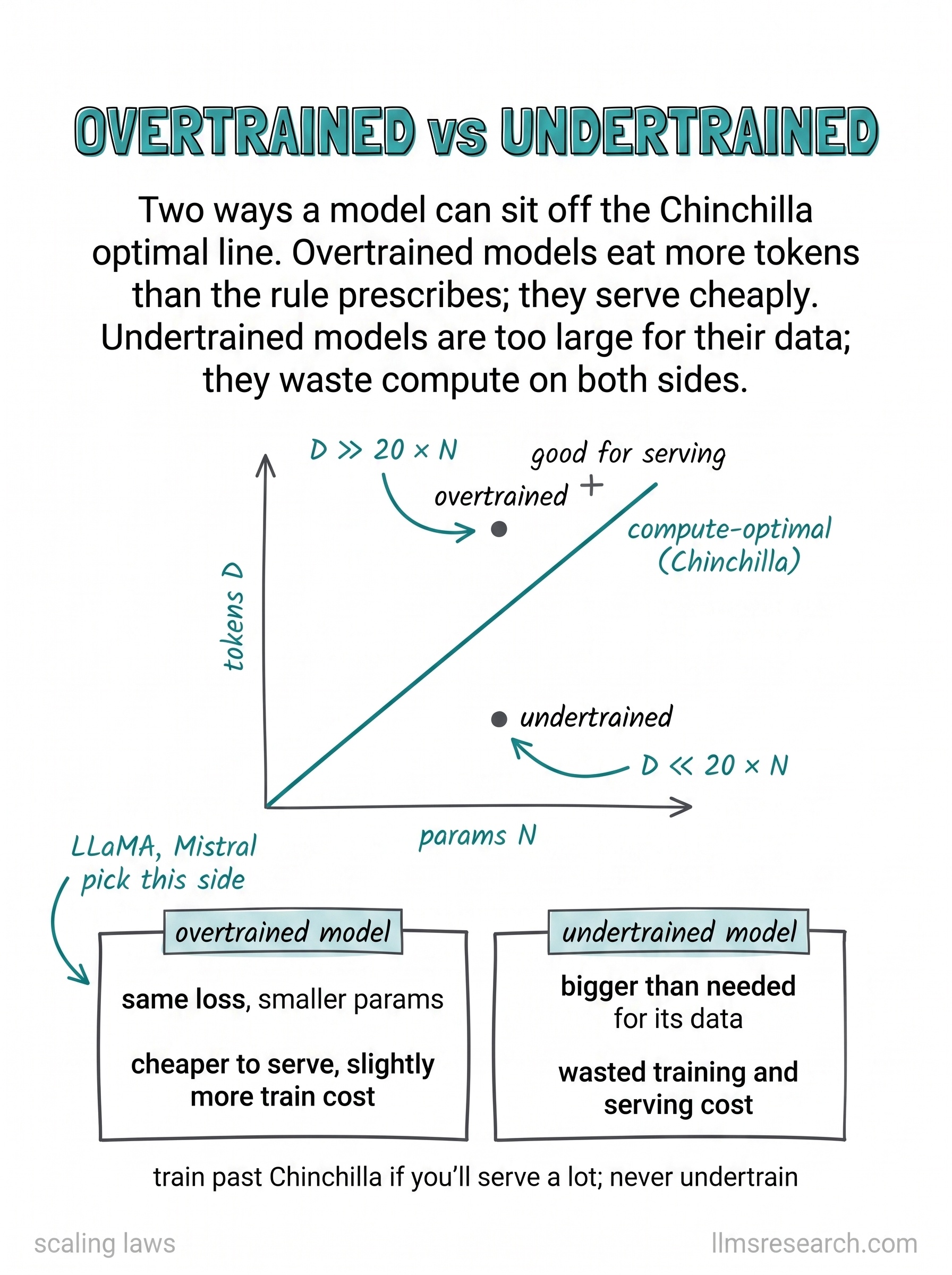
The Chinchilla line is a single diagonal on the parameters-versus-tokens plane, so any real model is either on it or on one side of it. This card names the two sides. A model above the line has more tokens than the ratio prescribes, D much greater than 20 times N, and is called overtrained. A model below the line has too few tokens for its size, D much less than 20 times N, and is called undertrained. The words describe the data-to-size balance, not whether training ran too long in any absolute sense.
The overtrained side is the useful one, which is worth stating clearly because the name sounds like a defect. An overtrained model reaches a target loss with fewer parameters than Chinchilla would use, because the extra data compensates for the smaller size. The box on the card gives the payoff: same loss, smaller parameters, so it is cheaper to serve, at the cost of slightly more training compute. That trade, spend more on the one training run to save on every inference, is exactly why the production model families train far past the Chinchilla point. The card marks their choice directly, LLaMA and Mistral pick this side.
The undertrained side is the one to avoid. A model below the line is bigger than its data can justify, so it carries parameters it never learned to use well. The box lists the consequence: it wastes both training and serving cost, large enough to be expensive to run yet not fed enough to earn that size in quality. There is no regime where undertraining is the deliberate goal; it is what happens when a model is scaled up without scaling its data to match, which is the mistake the earlier Gopher point on the Chinchilla card illustrated.
The bottom caption compresses the whole chapter’s practical advice into one line: train past Chinchilla if you will serve a lot, never undertrain. Chinchilla marks the training-optimal point, but the right target depends on how the model will be used. Overtraining is a considered choice that trades training cost for cheaper inference; undertraining is simply waste on both sides of the line.